

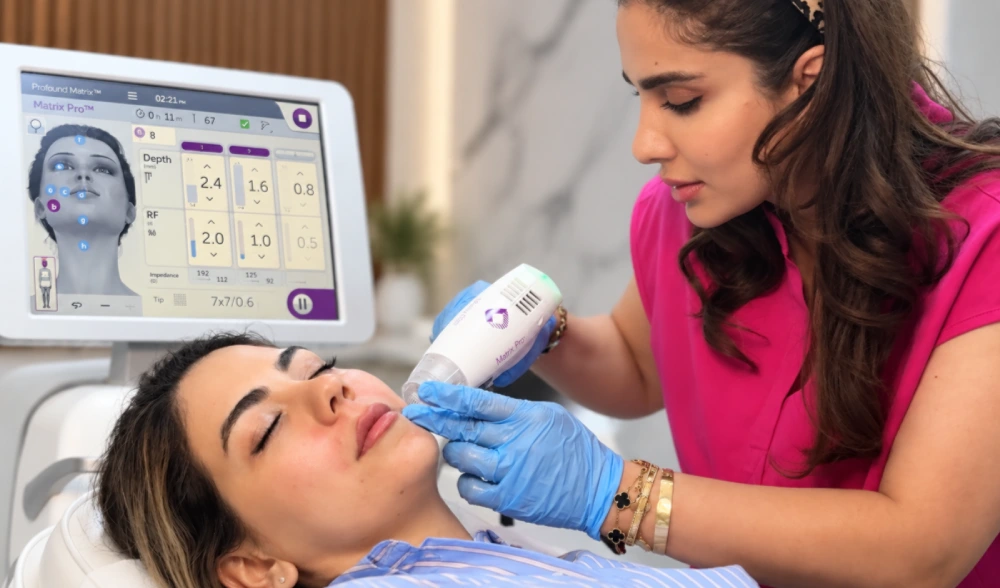
Editorial disclosure: TrustMed Clinic offers Matrix Pro® RF microneedling. This review evaluates the available clinical evidence, including device-specific studies, manufacturer-supported material and peer-reviewed literature. Evidence limitations and study provenance are identified where relevant.
Abstract
Radiofrequency microneedling (RFM) is increasingly used in aesthetic medicine, combining controlled microneedle penetration with delivery of radiofrequency energy into the skin. Matrix Pro® is a bipolar RFM applicator using a 49-pin array of ultra-fine 0.16 mm (34-gauge) semi-insulated microneedles. It delivers short-pulse RF energy at up to three selected tissue depths during a single insertion and incorporates real-time tissue-impedance monitoring (Schomacker et al., 2024).
The Matrix Pro-specific clinical literature remains relatively small but includes an IRB-approved clinical evaluation across Fitzpatrick skin types I–VI, objective optical coherence tomography (OCT) measurements, periorbital case evidence and preliminary investigation in primary axillary hyperhidrosis (Borger, 2024; Ly et al., 2023; Rambhia et al., 2024; Schallen et al., 2025). In a 10-subject clinical evaluation, 94% of assessed treatment areas were rated “Much Improved” or “Very Much Improved” using the Investigator Global Aesthetic Improvement Score (GAIS) at one month, increasing to 100% at three months (Borger, 2024). Mild edema and erythema were the most commonly reported post-treatment responses, with no treatment-associated complications reported in this cohort (Borger, 2024).
A separate 11-subject imaging study found a significant reduction in mean OCT-measured vascular density at 0.5 mm, from 26.3% at baseline to 15.1% at follow-up (p=0.0043) (Ly et al., 2023). Case-based evidence additionally describes improvements in selected periorbital presentations, including malar mounds, edema and festoon-related presentations (Schallen et al., 2025). In preliminary primary axillary hyperhidrosis data, 92% of assessed treatment areas showed marked or near-total investigator-rated improvement at one month, alongside significant reductions in Hyperhidrosis Disease Severity Scale (HDSS) scores (Rambhia et al., 2024).
Collectively, these findings provide an encouraging and expanding evidence base for Matrix Pro, including clinical experience across diverse skin types and objective imaging evidence of tissue response. As the Matrix Pro-specific literature continues to develop, further controlled studies and longer-term follow-up will help clarify treatment outcomes and their durability.
From RF Microneedling to Multi-Depth Treatment: Why Does It Matter?
RFM delivers electrical energy through needle electrodes positioned within tissue, producing controlled fractional thermal zones beneath the skin surface. Mechanical needle injury and RF-induced thermal coagulation then initiate wound-healing and remodelling responses. Fractional treatment leaves intervening tissue relatively unaffected, which contributes to the recovery characteristics of the technology (Alessa & Bloom, 2020; Weiner, 2019).
The more clinically interesting question is how accurately those thermal zones can be positioned.
Matrix Pro uses a 49-needle array of 0.16 mm (34-gauge) semi-insulated microneedles and permits sequential RF delivery at up to three operator-selected depths during a single insertion. Available depths extend from 0.8 to 3.5 mm, while the energy delivered at each selected level can be adjusted independently (Schomacker et al., 2024).
Rather than requiring a separate insertion or pass for every intended tissue level, a single deployment can therefore produce vertically separated treatment zones. The distal 0.6 mm of each microneedle is exposed for RF delivery, while the remainder is insulated, helping localise energy delivery to the selected tissue level (Schomacker et al., 2024).
The system also monitors tissue impedance during RF delivery. Impedance varies with factors including tissue characteristics, hydration, depth and temperature. Matrix Pro provides real-time impedance feedback at each selected depth and displays starting and ending impedance measurements following RF delivery, providing the operator with information about tissue engagement and response during treatment (Schomacker et al., 2024).
These are engineering characteristics rather than evidence of clinical superiority in themselves. Their clinical significance ultimately depends on whether controlled multi-level energy delivery translates into reproducible patient outcomes.
What Does the Clinical Evidence for Matrix Pro Show?
An Institutional Review Board (IRB)-approved clinical study presented at ASLMS 2024 evaluated Matrix Pro treatment of the face, submental area and neck (Borger, 2024).
The study enrolled healthy adults aged 18–75 across Fitzpatrick skin types I–VI. Participants received up to three Matrix Pro treatments at intervals of approximately six weeks, with assessments performed one and three months after the final treatment. Outcomes included the Investigator Global Aesthetic Improvement Score (GAIS), Fitzpatrick Wrinkle and Elastosis Scale (FWES) assessments where applicable, patient satisfaction, willingness to recommend treatment and post-treatment reactions (Borger, 2024).
Ten women with a mean age of 44 years were treated. Thirty-one treatment areas were evaluated at one month and 30 at three months. Mean investigator-rated GAIS improvement was 2.5 at both follow-ups. Ninety-four per cent of evaluated treatment areas were rated “Much Improved” or “Very Much Improved” at one month, increasing to 100% at three months (Borger, 2024).
Patient-reported satisfaction was also high: 87% of participants were “Very Satisfied” at both follow-ups, and all participants reported that they would recommend or strongly recommend the treatment to a friend (Borger, 2024).
Mild edema and erythema were common post-treatment responses, while petechiae and microscopic epidermal necrotic debris (MENDs) were not observed. No treatment-associated complications were reported in this small cohort (Borger, 2024).
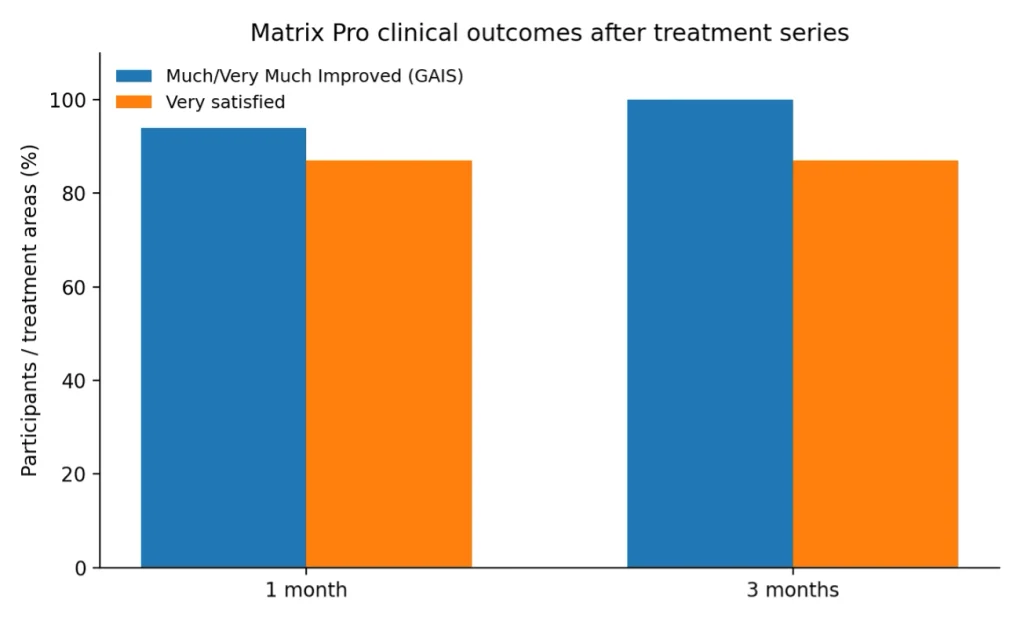
Graph 1. Clinical outcomes following a Matrix Pro treatment series. Investigator-rated GAIS classified 94% of evaluated treatment areas as “Much Improved” or “Very Much Improved” at one month, increasing to 100% at three months. Eighty-seven per cent of participants reported being “Very Satisfied” at both follow-ups. Graph independently redrawn from numerical results reported by Borger (2024); not reproduced from a manufacturer figure.
These results are encouraging, particularly because all six Fitzpatrick skin types were represented. However, the percentages should be interpreted in the context of the small sample size and uncontrolled study design. Larger controlled studies would provide greater certainty about the magnitude and durability of the observed effects (Borger, 2024).
Matrix Pro RF Microneedling: Evidence at a Glance
| Study | Application | Study design / sample | Key findings | Main limitation | Borger (2024) | Facial and neck skin tone and texture | Prospective clinical evaluation; 10 subjects, Fitzpatrick I–VI | 94% of assessed areas rated “Much Improved” or “Very Much Improved” at 1 month and 100% at 3 months; 87% of participants “Very Satisfied” at both follow-ups | Small cohort; uncontrolled design and limited follow-up |
|---|---|---|---|---|
| Ly et al., 2023 | Facial treatment for wrinkles, melasma and/or acne scarring | Prospective OCT pilot study; 11 subjects, Fitzpatrick II–V | Mean vascular density at 0.5 mm decreased from 26.3% to 15.1% (p = .0043); minimal downtime reported | Small, heterogeneous cohort without a comparator |
| Schallen et al. (2025) | Periorbital rejuvenation, including selected festoons, malar bags and oedema | Clinical case series; 5 patients, Fitzpatrick I–V | Clinical improvement reported across selected periorbital presentations | Case-series evidence; cannot establish response rates or comparative efficacy |
| Rambhia et al. (2024) | Primary axillary hyperhidrosis | Preliminary clinical study; 14 adults | Significant HDSS improvement at 1 and 3 months (p < .01); marked or near-total improvement in 92% of treated areas at 1 month, with improvement maintained or increased in 80% of subjects at 3 months and 75% at 6 months. | Small preliminary cohort with decreasing follow-up numbers; comparative and longer-term evidence needed |
| Schomacker et al. (2024) | Matrix Pro technology and RF delivery | Technical white paper | Describes up to three treatment depths per insertion (0.8–3.5 mm) and real-time tissue-impedance monitoring |
Table 1. Summary of key Matrix Pro® RF microneedling evidence reviewed in this article. The current device-specific literature includes prospective clinical evaluation, objective OCT imaging, case-series evidence, preliminary therapeutic investigation and technical research. Study designs and sample sizes should be considered when interpreting the reported outcomes (Borger, 2024; Ly et al., 2023; Rambhia et al., 2024; Schallen et al., 2025; Schomacker et al., 2024).
The consistency of the signals is noteworthy. The certainty of those signals, however, remains constrained by study design and scale.
RF Microneedling in Darker Skin: What Does the Evidence Support?
Skin phototype is an important consideration when evaluating energy-based aesthetic procedures.
Unlike optical treatments that depend upon absorption by specific chromophores, RF-induced tissue heating is not principally dependent upon melanin absorption. This characteristic is relevant when considering RF microneedling across a broad range of skin phototypes (Candela Corporation, 2024).
The Matrix Pro clinical evaluation provides device-specific evidence because it enrolled subjects across Fitzpatrick skin types I–VI, rather than extrapolating outcomes obtained solely in lighter skin. Participants received two to three Matrix Pro treatments to the face, submental area and/or neck, with treatment parameters selected according to Fitzpatrick skin type, skin response and clinical endpoint (Borger, 2024).
Mild post-treatment edema and erythema were common in this small cohort. Petechiae and microscopic epidermal necrotic debris (MENDs) were not observed, and no treatment-associated complications were reported (Borger, 2024).
One clinical example involved a 28-year-old Black woman with Fitzpatrick skin type V who received three Matrix Pro treatments. At the three-month follow-up, the Investigator Global Aesthetic Improvement Score (GAIS) was assessed as “Much Improved” (Borger, 2024).
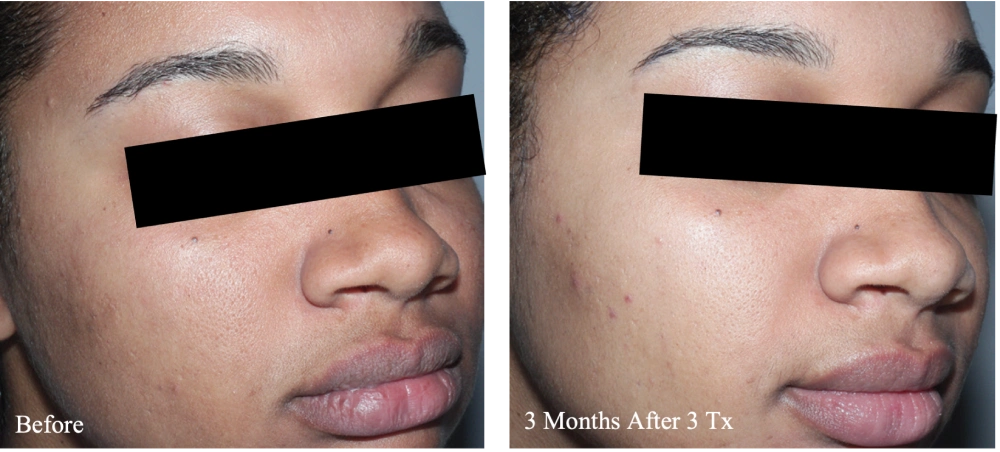
Figure 1. Clinical example of Matrix Pro treatment in Fitzpatrick V skin. A 28-year-old Black woman with Fitzpatrick skin type V received three Matrix Pro treatments. At the three-month follow-up, investigator-rated GAIS classified the treatment result as “Much Improved” (Borger, 2024). Photos courtesy of Concierge Medical Arts, Judith Borger, DO. All photos are unretouched. Individual results may vary.
Additional case-based experience has also been reported in Asian skin. In one Fitzpatrick IV patient treated twice with Matrix Pro, visible improvement in skin condition was reported; erythema was mostly resolved by the following day, while transient pinpoint crusting resolved naturally at approximately one week (Candela Corporation, 2024).
Taken together, these findings provide preliminary clinical evidence for Matrix Pro use across a broad phototype range, including darker skin types. They should not, however, be interpreted as demonstrating zero risk of post-treatment pigmentation changes or identical risk across every patient. Larger clinical datasets are required to better characterise uncommon adverse events and outcomes within individual skin-type groups.
What Objective Tissue Changes Have Been Measured?
Clinical photography and aesthetic grading contain subjective elements. Objective imaging therefore provides a complementary measure of biological tissue response.
A prospective pilot study used optical coherence tomography (OCT) and line-field confocal OCT to evaluate skin following Matrix Pro treatment. Eleven subjects—10 women and one man, with Fitzpatrick skin types II–V—received up to three facial treatments for wrinkles, melasma and/or acne scarring (Ly et al., 2023).
Vascular density was assessed at different tissue depths. At 0.5 mm, 10 of 11 participants demonstrated a reduction following treatment. Mean vascular density decreased from 26.3% at baseline to 15.1% at follow-up, an absolute reduction of 11.2 percentage points (p = .0043) (Ly et al., 2023).
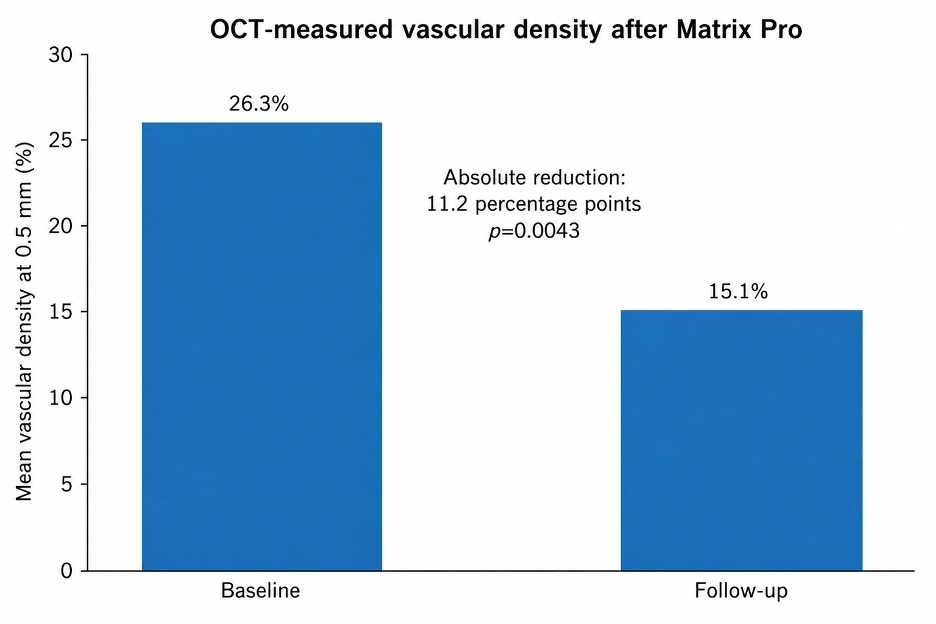
Graph 2. Change in OCT-measured vascular density following Matrix Pro treatment. Mean vascular density at 0.5 mm decreased from 26.3% before treatment to 15.1% at follow-up (absolute reduction, 11.2 percentage points; p = .0043). Graph independently redrawn from the numerical results reported by Ly et al., 2023. This finding requires careful interpretation. A measurable change in vascular density demonstrates an objectively detectable tissue response, but reduced vascular density is not synonymous with clinical rejuvenation. This was a small pilot study involving heterogeneous aesthetic concerns, so the finding is best interpreted as objective evidence of tissue response rather than proof of a specific clinical benefit.
Under-Eye Bags, Malar Mounds and Festoons: What Does the Evidence Actually Show?
Periorbital ageing illustrates why anatomical assessment is more informative than relying on a symptom label alone.
“Under-eye bags” may reflect different anatomical presentations. The supplied periorbital clinical literature distinguishes malar edema, malar mounds and festoons, alongside changes involving structures such as the orbicularis retaining ligament, malar septum, zygomaticocutaneous ligament and orbital fat (Schallen et al., 2025).
This distinction matters because improvement in one anatomical component cannot be assumed to produce an equivalent response across every cause of lower-eyelid or lid-cheek prominence.
A Matrix System clinical series described five patients aged 50–66, spanning Fitzpatrick skin types I–V, treated for selected periorbital concerns. Patients generally received two or three Matrix Pro treatments at approximately four-to-six-week intervals (Schallen et al., 2025).
In one 66-year-old patient with photoaging and skin-redundant festooning, visible reduction in the festoons was reported one month after the first treatment, with progressive improvement following subsequent treatment (Schallen et al., 2025).
Another 61-year-old patient presented with malar bags and edema. Following two treatments, the authors reported diminished malar bags and edema alongside improvements in skin quality, complexion, texture and periorbital puffiness (Schallen et al., 2025).
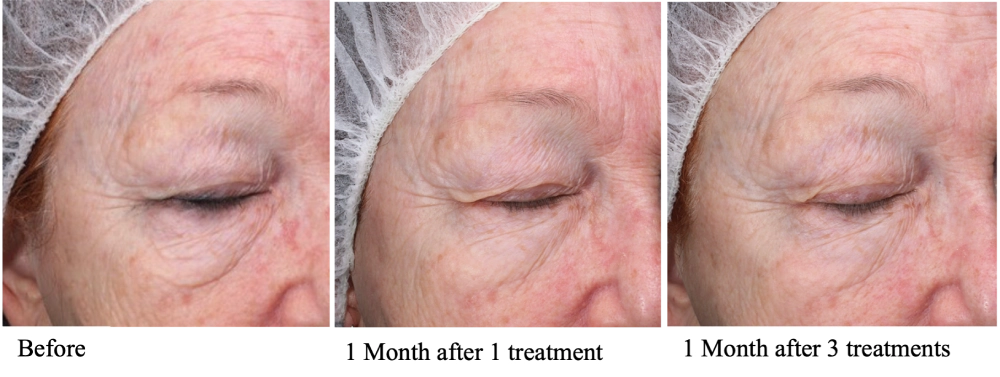
Figure 2. Clinical case showing the progression of a selected festoon presentation following a series of Matrix Pro treatments. Visible improvement was reported following treatment; however, this represents an individual case and should not be interpreted as predicting an equivalent response across different periorbital presentations (Schallen et al., 2025). Photos courtesy of David Friedman, MD (Israel). All photos are unretouched. Individual results may vary.
These cases provide preliminary clinical evidence of improvement in selected periorbital presentations, including festoons, malar bags and edema. However, the evidence is case-based and does not establish response rates, comparative effectiveness or the likelihood of improvement for an individual patient.
The clinically relevant question is therefore not simply whether RFM “treats eye bags”, but which anatomical component is producing the patient’s periorbital concern and whether controlled tissue remodelling can meaningfully influence it.
RF Microneedling for Primary Axillary Hyperhidrosis: An Emerging Application
Primary axillary hyperhidrosis represents a distinctly different application of RF microneedling.
The rationale is anatomical. Sweat glands extend into the deeper dermis and superficial subcutaneous tissue, and fractional microneedle RF has been investigated as a means of producing controlled thermal injury at these depths (Rambhia et al., 2024).
Preliminary data presented at ASLMS 2024 involved 14 healthy adults with primary axillary hyperhidrosis and baseline Hyperhidrosis Disease Severity Scale (HDSS) scores of ≥3 (Rambhia et al., 2024).
Participants received two or three bilateral fractional RFM treatments at six-week intervals. Each insertion delivered fractional thermal injury at three depths: 3.5, 2.7 and 1.9 mm (Rambhia et al., 2024).
Most subjects demonstrated a one-to-three-point reduction in HDSS, with statistically significant improvement at the one-month (n=12) and three-month (n=10) follow-ups (p<0.01) (Rambhia et al., 2024).
Investigator Global Improvement assessment showed marked or near-total improvement in 92% of treated areas at one month, with a mean score of 3.5. Results were maintained or improved in 80% of subjects at three months and 75% at six months, with a mean score of 3.0 at both follow-ups (Rambhia et al., 2024).
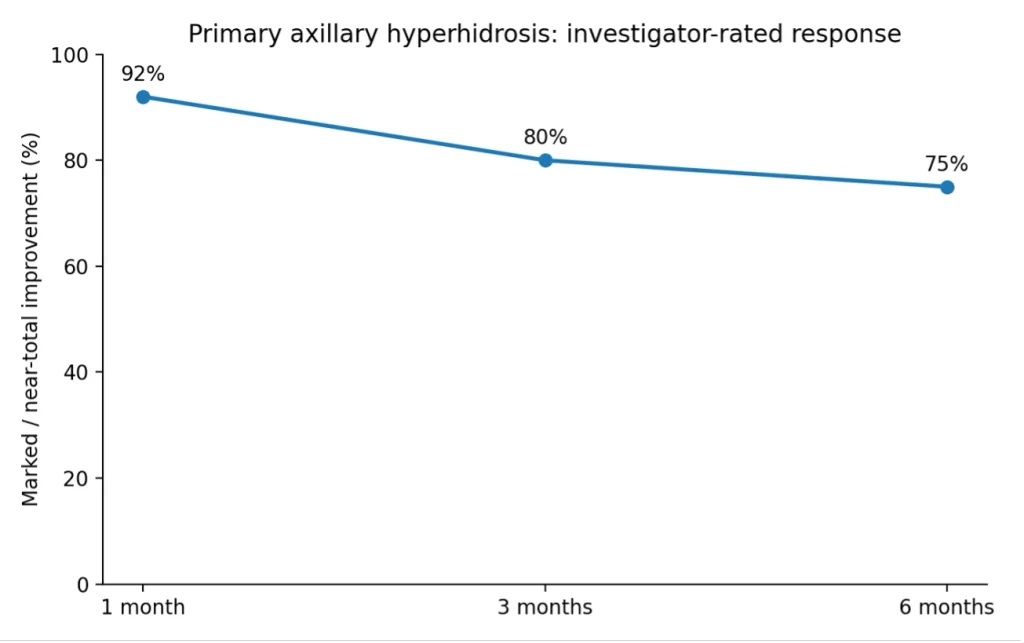
Graph 3. Investigator-rated improvement following fractional RFM for primary axillary hyperhidrosis. Marked or near-total improvement was reported in 92% of treated areas at one month; results were maintained or improved in 80% of subjects at three months and 75% at six months. Mean GIS was 3.5 at one month and 3.0 at both three and six months. Graph independently redrawn from reported study results (Rambhia et al., 2024).
One illustrative case involved a 20-year-old woman with Fitzpatrick skin type III who received three treatments. Her HDSS decreased from 4 at baseline to 3 at one month and 2 at both three and six months. Investigator assessment classified her as “Nearly totally improved (>75%)” at all follow-ups, and she reported being “Very satisfied” with the treatment outcome (Rambhia et al., 2024).
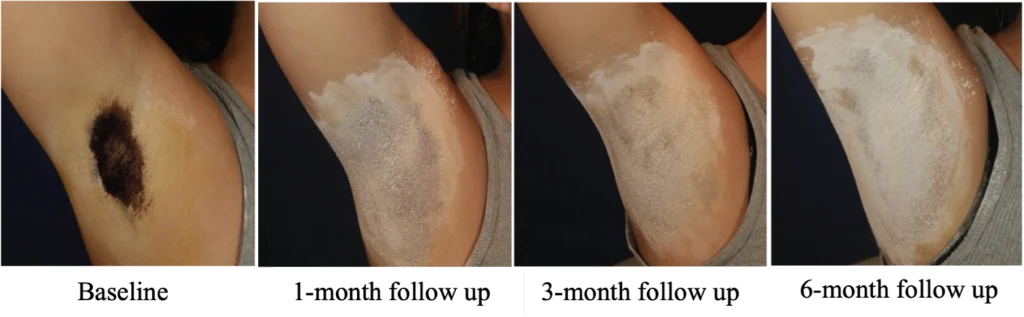
Figure 3. Starch–iodine testing in a patient treated for primary axillary hyperhidrosis. HDSS changed from 4 at baseline to 2 at three- and six-month follow-up (Rambhia et al., 2024). Pooja Rambhia, MD, Lauren Hoffman, MD, and Anne Chapas, MD. UnionDerm. (as presented at ASLMS 2024). All photos are unretouched. Individual results may vary.
These findings are promising but preliminary. The small cohort and decreasing numbers available at follow-up limit conclusions about response rates, comparative effectiveness and longer-term durability. Primary axillary hyperhidrosis is therefore best described here as an emerging application of fractional RFM supported by early clinical evidence, rather than drawing broader conclusions from this study alone.
What Adverse Events Have Been Reported in Matrix Pro Studies?
Safety is best evaluated from reported clinical outcomes rather than broad claims such as “safe” or “no downtime.”
In a clinical evaluation of 10 women with Fitzpatrick skin types I–VI, mild post-treatment oedema and erythema were common following Matrix Pro RF microneedling. Petechiae and microscopic epidermal necrotic debris (MENDs) were not observed, and investigators reported no treatment-associated complications (Borger, 2024).
In the primary axillary hyperhidrosis investigation, mild-to-moderate oedema and erythema were also commonly reported, while purpura and petechiae were rare and MENDs were absent (Rambhia et al., 2024).
In the 11-subject OCT pilot study, investigators reported minimal downtime and no adverse side effects following treatment (Ly et al., 2023).
Collectively, these small studies provide an encouraging early safety signal, but they are not large enough to establish the frequency of uncommon adverse events. The absence of a complication in a small clinical study should not be interpreted as evidence that the complication cannot occur.
How Strong Is the Current Evidence for Matrix Pro RF Microneedling?
The Matrix Pro literature contains several different levels of evidence, and they should not be weighted equally.
Strengths
A prospective facial and neck study included 10 participants across the full Fitzpatrick I–VI skin phototype range and used investigator- and patient-reported outcome measures (Borger, 2024).
An 11-participant OCT pilot study added objective imaging data, demonstrating measurable changes in vascular density following treatment rather than relying solely on clinical photography or subjective assessment (Ly et al., 2023).
A five-patient periorbital case series explored Matrix Pro treatment across different anatomical presentations, including malar oedema, malar mounds and festoons (Schallen et al., 2025).
A preliminary study of 14 adults with primary axillary hyperhidrosis also investigated depth-controlled fractional RF microneedling beyond cosmetic skin remodelling, reporting improvements in HDSS and investigator-rated outcomes (Rambhia et al., 2024).
Taken together, these studies show a reasonably consistent pattern of measurable tissue response, investigator-rated improvement and patient satisfaction.
Limitations
The most obvious limitation is sample size. The principal datasets reviewed here contain 10, 11, five and 14 patients respectively (Borger, 2024; Ly et al., 2023; Rambhia et al., 2024; Schallen et al., 2025).
Several reports are case series or case reports. These are useful for identifying potential applications but cannot establish comparative efficacy.
Follow-up is also relatively short for a technology whose proposed benefit involves progressive tissue remodelling. More independent data extending beyond six to 12 months would help establish durability.
Another consideration is the provenance of the evidence. A substantial proportion of the supplied Matrix Pro literature consists of Candela clinical bulletins, white papers or studies associated with the manufacturer. That does not invalidate the findings, but it increases the importance of independent replication.
Finally, there is limited head-to-head evidence demonstrating that the engineering advantages of multi-depth delivery and impedance monitoring translate into clinically superior long-term outcomes compared with other contemporary RFM platforms.
The evidence supports clinical promise. It does not yet support treating every proposed application as conclusively established.
Where Does Multi-Depth RFM Fit in Evidence-Based Aesthetic Medicine?
The development of multi-depth RFM reflects a broader shift towards anatomy-directed, individualised treatment rather than a one-setting-fits-all approach.
Skin thickness, dermal architecture, subcutaneous tissue and the anatomical basis of a concern vary between facial regions and patients. The ability to adjust treatment depth and RF energy therefore has a clear clinical rationale.
Matrix Pro can deliver RF energy at up to three operator-selected depths within a single insertion and incorporates Depth Intelligence™ real-time impedance monitoring. The system measures tissue impedance during RF delivery and adjusts pulse duration and power to deliver the selected energy (Schallen et al., 2025).
The more important evidence question is whether these engineering features translate into meaningfully better clinical outcomes, tolerability, safety or treatment efficiency.
Current Matrix Pro studies provide early clinical and objective evidence, but the evidence base remains relatively small. This is not unusual in medical aesthetics, where large, long-term, independently funded comparative trials may be less common than in therapeutic areas associated with substantial disease burden.
Future research would ideally include larger prospective cohorts, independent investigators, blinded assessment, standardised photography, objective imaging and longer follow-up. Head-to-head studies comparing multi-depth treatment with sequential single-depth RFM would be particularly valuable.
Until such evidence is available, multi-depth delivery and real-time impedance monitoring are best regarded as technically plausible and clinically relevant features—not, by themselves, proof of superior clinical outcomes.
Conclusion: What Does the Evidence Say About Matrix Pro RF Microneedling?
Matrix Pro represents an evolution of fractional radiofrequency (RF) microneedling towards more configurable, tissue-specific energy delivery.
Current device-specific evidence includes a prospective clinical evaluation across Fitzpatrick skin types I–VI, objective optical coherence tomography (OCT) research, and smaller studies examining periorbital concerns and primary axillary hyperhidrosis (Borger, 2024; Ly et al., 2023; Rambhia et al., 2024; Schallen et al., 2025).
Across these studies, investigators have reported clinical improvement and patient satisfaction, measurable tissue changes and generally mild, transient treatment responses. Importantly, however, the evidence remains promising rather than definitive. Study populations are small, several datasets are uncontrolled or observational, and some of the available research has manufacturer involvement.
For patients considering Matrix Pro RF microneedling, the evidence therefore supports a measured conclusion: multi-depth RF microneedling is a promising minimally invasive tissue-remodelling technology, with an expanding evidence base across aesthetic applications and emerging areas of clinical investigation. Treatment should remain individualised according to anatomy, skin type, treatment goals and the strength of evidence for the specific indication.
Like other RF microneedling devices, Matrix Pro uses microneedles to deliver radiofrequency energy below the skin surface, creating controlled thermal coagulation zones while largely preserving surrounding tissue (Markowitz et al., 2023; Weiner, 2019).
A key technical difference is multi-depth delivery. Matrix Pro can deliver RF energy at up to three operator-selected depths during a single needle insertion, from 0.8 to 3.5 mm, with energy independently adjustable for each depth. This is designed to target different tissue levels without requiring a separate insertion or pass for every selected depth (Schomacker et al., 2024).
The system also incorporates Depth Intelligence™ real-time impedance monitoring, which measures tissue impedance during RF delivery and adjusts pulse duration and power (Schomacker et al., 2024).
These features distinguish Matrix Pro technically from many conventional RF microneedling systems. However, technical differences should not automatically be interpreted as proof of superior clinical outcomes. Direct comparative evidence demonstrating better long-term efficacy or safety than other contemporary RF microneedling devices remains limited.
In short: Matrix Pro is RF microneedling, but not all RF microneedling systems use the same needle design, energy-delivery method, multi-depth capability or real-time impedance feedback.
References
● Schomacker, K., Qiu, J., & Schallen, K. P. (2024).
Matrix Pro® bipolar radiofrequency microneedling applicator [Technical white paper].
Candela Corporation.
● Borger, J. (2024).
Improving skin tone and texture for all Fitzpatrick skin types using 3-in-1 depth bipolar fractional radiofrequency.
Lasers in Surgery and Medicine, 56, S5–S185.
● Ly, T. A., Amro, H., & Markowitz, O. (2023).
Vascular density changes after treatment with a bipolar radiofrequency system incorporating a novel applicator with the thinnest array of microneedles. Annals of Clinical Medicine and Research, 4(1), 1069.
Go to reference
● Rambhia, P. H., Hoffman, L., & Chapas, A. (2024).
Hyperhidrosis treatment using a novel 3-in-1 depth bipolar fractional radiofrequency microneedling device. Lasers in Surgery and Medicine, 56(S36). [ASLMS 2024 Abstracts].
● Schallen, K. P., Chee, A., Talei, B., Friedman, D., Levin, F., & Ishikawa, H. (2025).
Periorbital rejuvenation using the Matrix skin renewal system [White paper]. Candela Corporation.
Go to reference
● Alessa, D., & Bloom, J. D. (2020).
Microneedling options for skin rejuvenation, including non-temperature-controlled fractional microneedle radiofrequency treatments. Facial Plastic Surgery Clinics of North America, 28(1), 1–7. https://doi.org/10.1016/j.fsc.2019.09.001
Go to reference
● Weiner, S. F. (2019).
Radiofrequency microneedling: Overview of technology, advantages, differences in devices, studies, and indications. Facial Plastic Surgery Clinics of North America, 27(3), 291–303. https://doi.org/10.1016/j.fsc.2019.03.002
Go to reference
● Candela Corporation. (2024).
Matrix Pro® bipolar radiofrequency microneedling treatment in Asian skin [Case spotlight].
About the Author

Reza Taghipour-Mirakmahaleh, PhD, is a biomedical scientist, aesthetic practitioner and Scientific Lead at TrustMed Aesthetic Clinic. He holds a doctorate in Molecular Medicine from Laval University, Canada, and completed postdoctoral research in Clinical Neuroscience at the University of Oxford.
His research background spans clinical and translational neuroscience. He is a co-first author of peer-reviewed research published in the Proceedings of the National Academy of Sciences (PNAS), which provided preclinical proof of concept for a new therapeutic approach to autoimmune disease.
At TrustMed Aesthetic Clinic, he applies his scientific and research background to the critical evaluation of clinical evidence, aesthetic technologies and aesthetic treatments, supporting an evidence-based approach to aesthetic medicine.