

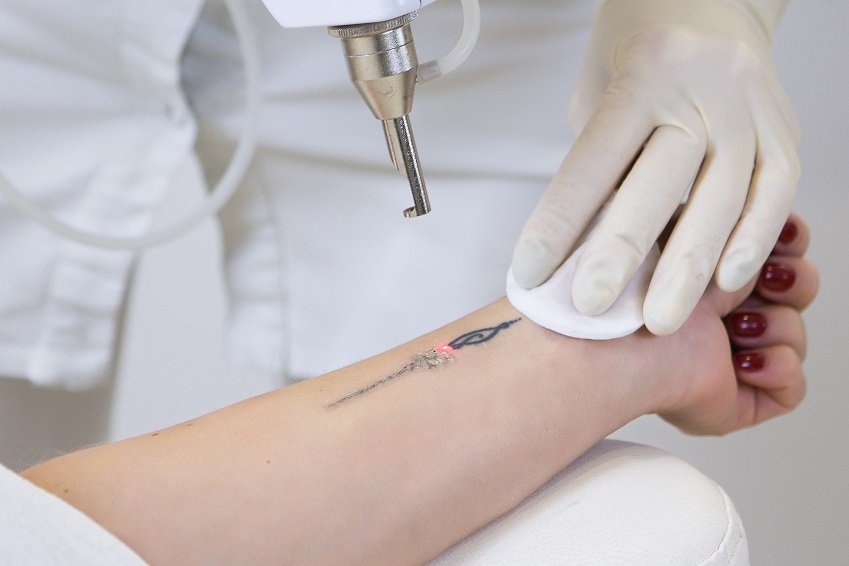
Laser tattoo removal uses high-energy light pulses to safely break down tattoo ink particles within the skin.
The body’s lymphatic system then gradually clears away the fragmented pigment, resulting in the fading and removal of unwanted tattoos over time.
This is the most effective and clinically-proven method for permanent tattoo reduction.
1. Consultation & Assessment
Your practitioner examines the tattoo’s colour, age, depth, and size to determine how many sessions are needed and whether you’re a suitable candidate.
2. Laser Application
A specialised laser (typically Q-switched or Pico technology) targets the tattoo ink.
Each ink colour absorbs a specific wavelength, causing the pigment to shatter into microscopic fragments.
3. Natural Clearance
Over the following weeks, your immune system flushes away the broken-down ink.
4. Gradual Fading
With each session, the tattoo becomes lighter until it fades significantly or completely.
Ideal for individuals who want to:
Usually 10–30 minutes depending on tattoo size and complexity.
Every tattoo is different.
Most clients need 6–12 sessions, spaced 6–8 weeks apart, to achieve optimal results.
Certain colours (black, blue, dark green) fade fastest; others (light green, yellow, red) may require additional sessions.
Results appear gradually.
The tattoo continues to fade for weeks after each session as the body processes the ink.
Once removed, the results are permanent.
Minimal, but temporary effects may include:
These typically resolve within 3–7 days.
Good aftercare significantly improves results and reduces risks.
It feels similar to a rubber band snapping against the skin, but the treatment is quick and can be made more comfortable with numbing.
Most colours can be significantly reduced.
Black ink responds best; lighter colours take longer but are still treatable with advanced lasers.
Scarring is uncommon when performed professionally and when aftercare is followed correctly.
It's recommended to wait at least 8–12 weeks after getting a tattoo before starting removal.
Book your appointment today and let our experienced team guide your aesthetic journey.